1921 → 2023 · 20 hyperinflations · 44 banknotes · every figure sourced
A century of dying money
Currencies die fast, and they die often. Steve Hanke counts 62 hyperinflations in recorded history, all but one since 1920, most of them within living memory. Almost every one began the same way: a state spent more than it could tax or borrow, and its central bank paid the difference with new money. Savings vanished, wages were spent the hour they were paid, and in the end a new currency had to be born. Here are 20 of them, case by case: the context, what happened, life during it, how it ended, the banknotes and the data.
With the exception only of the 200-year period of the gold standard, practically all governments of history have used their exclusive power to issue money in order to defraud and plunder the people.
After the Great War
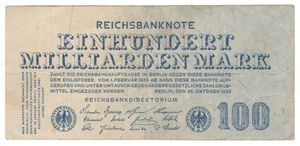
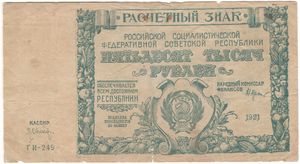
1921–1924 · 3 cases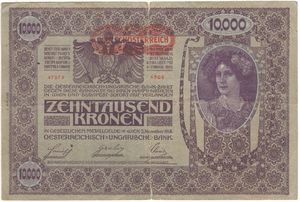
World War II
1941–1946 · 3 cases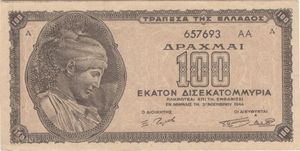
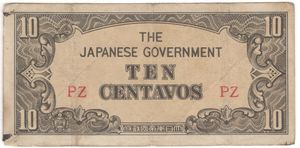
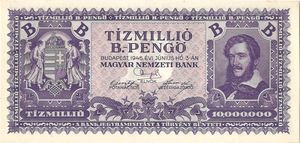
Latin America's debt crisis
1984–1994 · 5 cases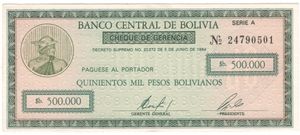
Bolivia
1984–1985 · Peso boliviano 183%worst month · February 1985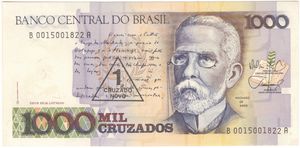
Brazil
1986–1994 · Cruzado / Cruzeiro 82.4%worst month · March 1990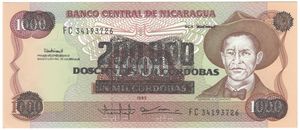
Nicaragua
1986–1991 · Córdoba 261%worst month · March 1991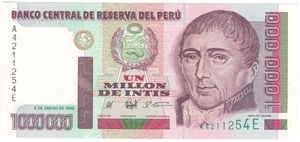
Peru
1988–1990 · Inti 397%worst month · August 1990Argentina
1989–1990 · Austral 197%worst month · July 1989The end of communism
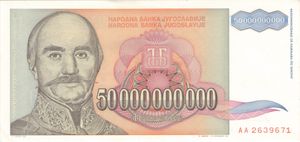
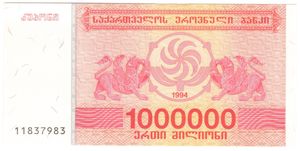
1989–1994 · 4 cases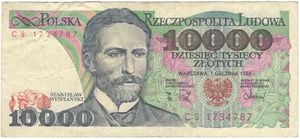
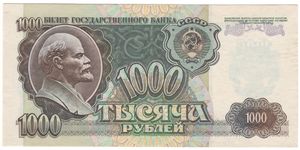
Wars in Africa
1991–1999 · 2 cases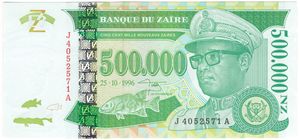
The 21st century
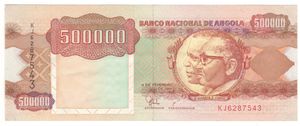
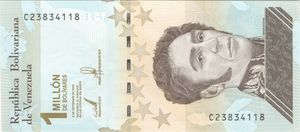
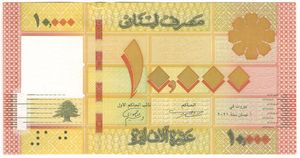
2007–2023 · 3 cases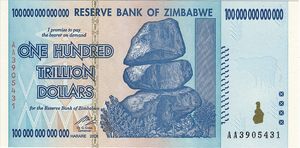
Contrast case
1990–2005 · 1 case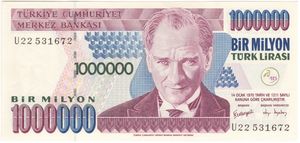
Paper money eventually returns to its intrinsic value: zero.
And even before
3rd century → 1865 · it was always the caseHanke and Krus's table starts in 1795 because a hyperinflation is measured in monthly prices, and before that no one kept them. Money died long before anyone could count the months. These are not full cases yet, only the record.
- 1795–1796
France: assignats and mandats
The Revolution's paper, first backed by confiscated church land, was printed to 45.5 billion francs. In mid-August 1796 prices rose 304% in a month and doubled every 15 days: the only hyperinflation in the Hanke–Krus table before 1920.
Source: Hanke & Krus 2012, row 14 · Wikipedia, Assignat
- 1861–1865
Confederate dollar
Notes in circulation went from $1 million in July 1861 to about $700 million by autumn 1863. A paper dollar worth 90 cents in gold at the end of 1861 was worth 6 cents during 1863. Savers lost 90% or more.
Source: Wikipedia, citing Schwab 1899
- 1775–1781
Continental dollar
Congress paid for the Revolution with $200 million of paper. By 1780 a Continental was worth 1/40 of its face value; by May 1781 it no longer circulated. Hence “not worth a Continental”.
- 1619–1623
Kipper und Wipper
At the start of the Thirty Years' War, German mints clipped good coins and recast them with lead, copper and tin, and spent fake copies of their neighbours' coins abroad. The famine of 1620–1623 is partly blamed on it.
- 14th–16th c.
Paper money in Yuan and Ming China
The first empire to run on paper also printed it to ruin. The Yuan's notes ended worthless; the Ming note of 1375 had no reserves and no limit on printing, and was abolished after it collapsed.
Source: Wikipedia, citing Bernholz 1997
- 215–301
Rome's silver coin
Caracalla's antoninianus was a double denarius holding 1.5 denarii of silver. Each emperor cut it further, to about 5% silver under Aurelian. In 301 Diocletian answered with price controls and the death penalty; by 305 the edict was ignored.
Source: Wikipedia, Antoninianus · Wikipedia, Edict on Maximum Prices
What counts
A hyperinflation starts in the month prices rise 50% or more (Cagan 1956). The worst month comes from Hanke & Krus (2012) unless a case says otherwise. Turkey is a contrast case.
Every figure sourced
Each case is written from a knowledge base where every number carries its source. What could not be verified is left out, not softened.