Home / Library
The
Library
The books to go further: hyperinflations told by those who studied them, what money is and what breaks it, and the way out.
Hyperinflation and monetary history
10 books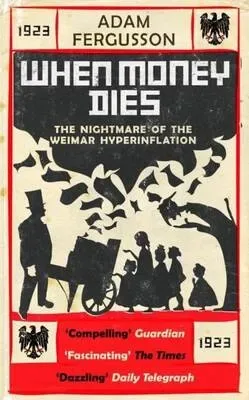
When Money Dies
Adam Fergusson · 1975 · intermediate
When Money Dies by Adam Fergusson is a book that explores the hyperinflation that occurred in Germany during the early 1920s, in the aftermath of World War I. The book provides a detailed…
Read more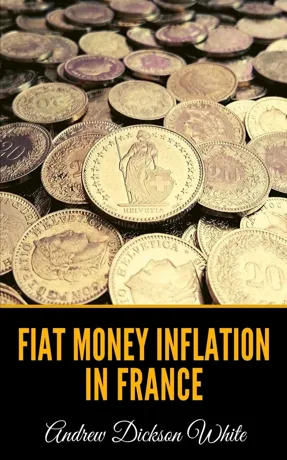
Fiat Money Inflation in France
Andrew Dickson White · 1896 · intermediatefree ebook
Fiat Money Inflation in France, written by Andrew Dickson White in 1896, is a seminal examination of the economic crisis that transpired after the French Revolution. The book scrutinizes…
Read more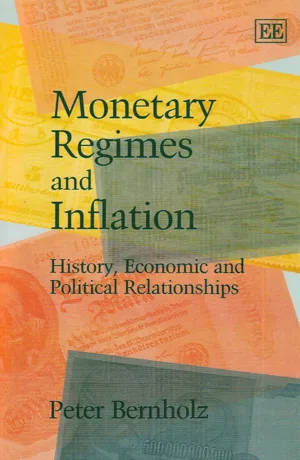
Monetary Regimes and Inflation: History, Economic and Political Relationships
Peter Bernholz · 2003 · advanced
Read more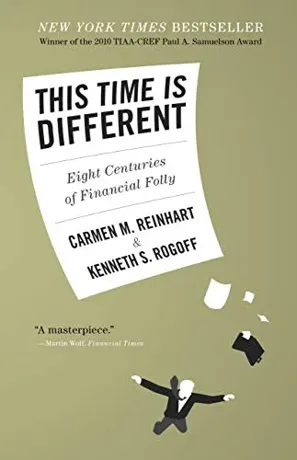
This Time Is Different: Eight Centuries of Financial Folly
Carmen M. Reinhart and Kenneth S. Rogoff · 2009 · advanced
This Time Is Different, Eight Centuries of Financial Folly by Carmen M. Reinhart and Kenneth S. Rogoff is a comprehensive study of financial crises throughout history. The authors examine…
Read more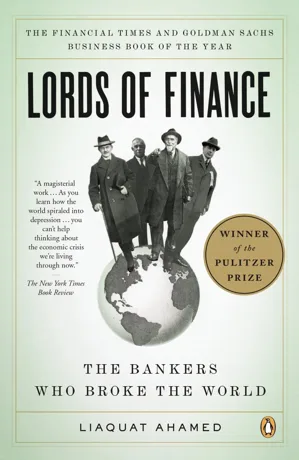
Lord of Finance
Liaquat Ahamed · 2009 · intermediate
"Lord of Finance" by Liaquat Ahamed is a non-fiction book that provides a detailed account of the four central bankers who dominated the world's financial system in the early 20th century.…
Read more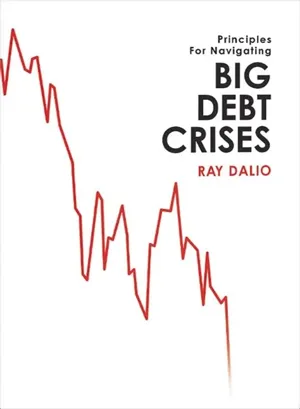
Big Debt Crises
Ray Dalio · 2018 · advanced
Big Debt Crises by Ray Dalio is a comprehensive study of debt crises that have affected economies throughout history. The book offers insights into the causes, mechanics, and outcomes of…
Read more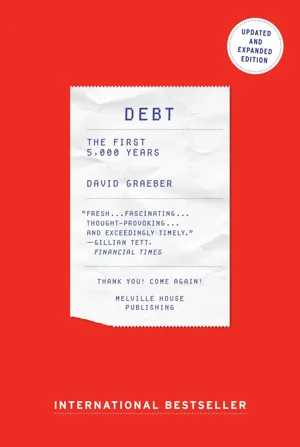
Debt: The First 5,000 Years
David Graeber · 2011 · intermediate
"Debt; the first 5000 years" by David Graeber is an anthropological and historical analysis of the concept of debt throughout human civilization, from ancient Sumer to modern-day. The…
Read more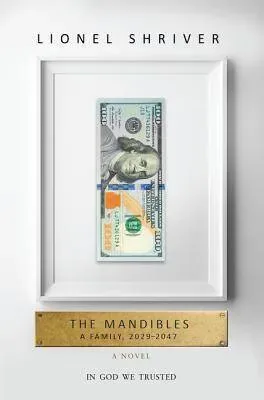
The Mandibles: A Family, 2029–2047
Lionel Shriver · 2016 · intermediate
The Mandibles, A Family, 2029-2047 by Lionel Shriver is a novel that explores the consequences of a financial collapse in the United States in the near future. The story follows the members…
Read more
Hard-Boiled Egg Index: Surviving Zimbabwe's Hyperinflation
Kudzai Joseph Gumunyu · 2019 · beginner
A Zimbabwean's first-hand account of living through the 2007–2009 hyperinflation.
Read more
Argentarius: Letters of a Bank Director to His Son
Alfred Lansburgh · 1933 · advanced
Argentarius; Letters of a Bank Director to his Son is a book written by Alfred Lansburgh in 1933. It is a collection of letters that the author wrote to his son, discussing various topics…
Read moreWhat money is, and what breaks it
14 books
The Theory of Money and Credit
Ludwig von Mises · 1912 · advancedfree ebook
The Theory of Money and Credit by Ludwig von Mises is an influential book that explores the nature of money and its effects on economic activity. Mises' work is regarded as one of the most…
Read more
What Has Government Done To Our Money
Murray Rothbard · 1963 · intermediatefree ebook
What Has Government Done To Our Money by Murray Rothbard is a classic book that delves into the history of money and the role of government in its development. It provides a critical…
Read more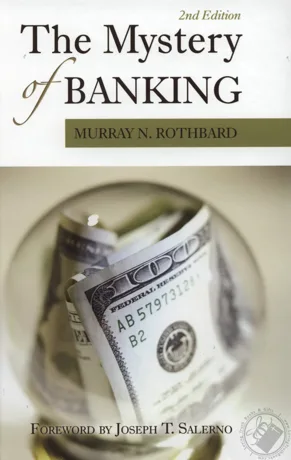
The Mystery of Banking
Murray Rothbard · 1983 · intermediatefree ebook
The Mystery of Banking by Murray Rothbard is a book that explores the history and workings of the banking system in the United States. The book explains how the current banking system has…
Read more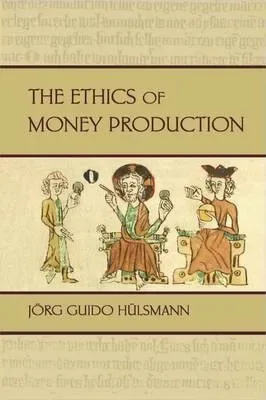
The Ethics of Money Production
Jörg Guido Hülsmann · 2007 · advancedfree ebook
The Ethics of Money Production by Jörg Guido Hülsmann is a comprehensive exploration of the ethical implications of money production and the role of central banks in the modern financial…
Read more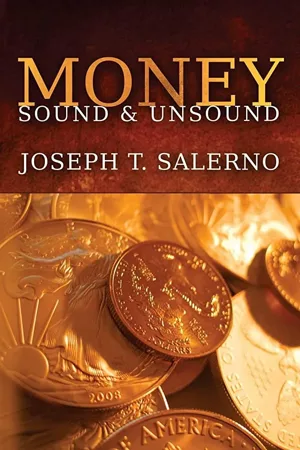
Money Sound and Unsound
Joseph Salerno · 2019 · advancedfree ebook
"Money Sound and Unsound" by Joseph Salerno is an expert-level book that explores the history of money and how different forms of money have impacted economies throughout history. The…
Read more
Honest Money
Gary North · 1986 · intermediatefree ebook
Read more
How Is Fiat Money Possible?
Hans-Hermann Hoppe · 1994 · advancedfree ebook
Read more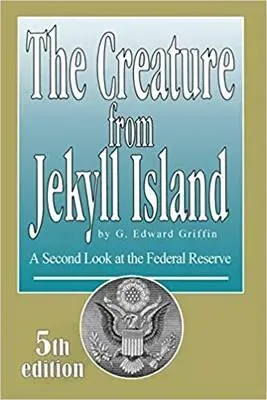
The Creature from Jekyll Island
G. Edward Griffin · 1994 · intermediate
The Creature from Jekyll Island by G. Edward Griffin is an intermediate-level book that delves into the history of the Federal Reserve System in the United States. Exploring the topic of…
Read more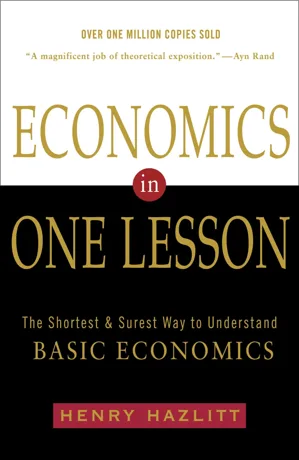
Economics in One Lesson
Henry Hazlitt · 1946 · beginnerfree ebook
Economics in One Lesson, penned by Henry Hazlitt in 1946, is a classic primer that breaks down complex economic concepts into comprehensible terms. The book focuses on the fundamental…
Read more
Shelling Out: The Origins of Money
Nick Szabo · 2002 · intermediatefree ebook
The precursors of money, along with language, enabled early modern humans to solve problems of cooperation that other animals cannot – including problems of reciprocal altruism, kin…
Read more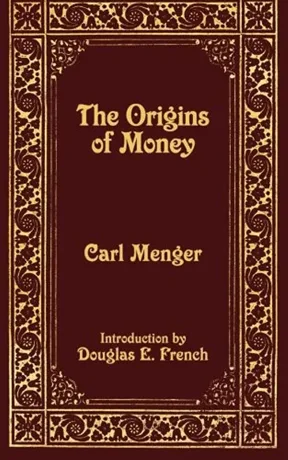
On The Origins of Money
Carl Menger · 1892 · intermediatefree ebook
Read more
Traictié de la première invention des monnoies
Nicolas Oresme · 1360 · intermediatefree ebook
Written around 1360 by the Bishop of Lisieux, Nicolas Oresme's treatise on the origin of money is one of the earliest works of monetary theory in the Western tradition. Oresme argues that…
Read more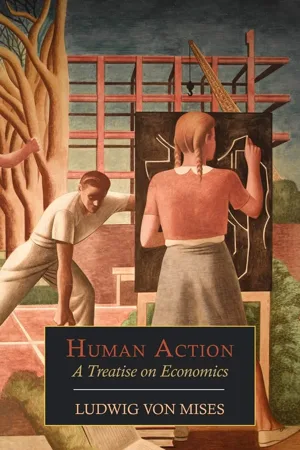
Human Action
Ludwig von Mises · 1949 · advancedfree ebook
In "Human Action", renowned Austrian economist Ludwig von Mises profoundly explores the philosophy behind economic activity, emphasizing the central role of human choice and its subsequent…
Read more
Du crédit et des banques
Charles Coquelin · 1848 · advancedfree ebook
Charles Coquelin's treatise on credit and banking (1848) is one of the strongest arguments for free banking in the French liberal tradition. Coquelin demonstrates that government monopoly…
Read moreFiat, and the way out
9 books
Broken Money: Why Our Financial System is Failing Us and How We Can Make it Better
Lyn Alden · 2023 · intermediate
Broken Money delves into the evolution of money, emphasizing the pivotal role of technology over politics in shaping monetary systems. Lyn Alden guides readers through the historical…
Read more
The Fiat Standard
Saifedean Ammous · 2021 · intermediate
The Fiat Standard by Saifedean Ammous is an intermediate-level book that delves into the economics and implications of fiat currency. Ammous explores the history, workings, and drawbacks of…
Read more
The Bitcoin Standard
Saifedean Ammous · 2018 · intermediate
The Bitcoin Standard by Saifedean Ammous explores the history of money and the potential of Bitcoin to revolutionize the global financial system. The author highlights Bitcoin's advantages…
Read more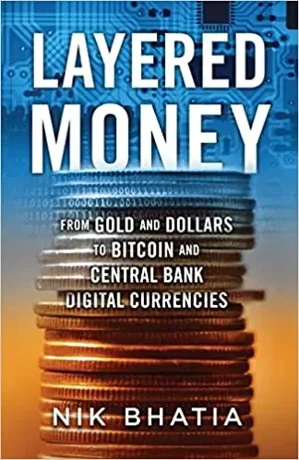
Layered Money
Nik Bhatia · 2020 · intermediate
"Layered Money" by Nik Bhatia is an intermediate-level book that explores the evolution of money from barter to digital currencies like Bitcoin. The author explains the concept of layered…
Read more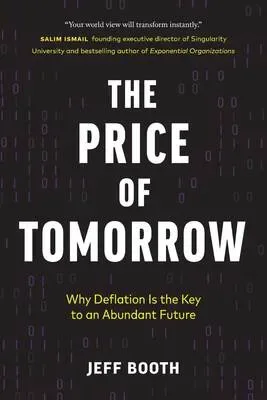
The Price of Tomorrow: Why Deflation Is the Key to an Abundant Future
Jeff Booth · 2020 · intermediate
The Price of Tomorrow; Why Deflation is the Key to an Abundant Future by Jeff Booth is a book that examines the impact of technology on our economy and how it is driving deflation. The…
Read more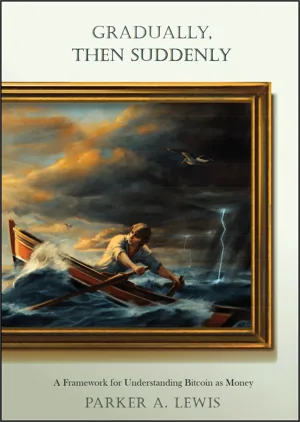
Gradually, Then Suddenly
Parker A. Lewis · 2023 · beginnerfree ebook
It is all a bit poetic when you think about it. The fall of 2008 can be interpreted in two ways: as a seasonal marker of the time of year when everything blew up, or a marker of greater…
Read more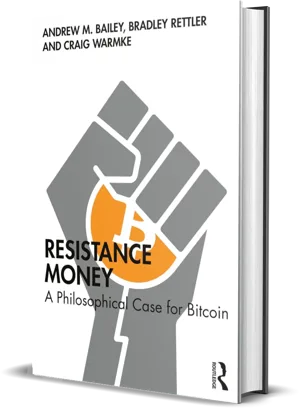
Resistance Money
Andrew M. Bailey, Bradley Rettler, Graig Warmke · 2024 · intermediate
Bitcoin is resistance money, empowering its users to resist authoritarians, inflation, surveillance, censorship, and financial exclusion. Resistance Money examines bitcoin’s monetary…
Read more
Check Your Financial Privilege
Alex Gladstein · 2022 · intermediate
Check Your Financial Privilege by Alex Gladstein is a book that explores the intersection of Bitcoin, human rights, financial privilege, and personal freedom. With a unique perspective…
Read more
End the Fed
Ron Paul · 2009 · intermediate
In "End the Fed," Ron Paul challenges the role of the Federal Reserve and argues that it is both corrupt and unconstitutional. Drawing on American history, economics, and his own political…
Read moreBooks, covers and descriptions from Plan B Network’s open educational content, CC BY-SA 4.0, with titles, names and punctuation corrected.
When Money Dies
Adam Fergusson · 1975 · intermediate
When Money Dies by Adam Fergusson is a book that explores the hyperinflation that occurred in Germany during the early 1920s, in the aftermath of World War I. The book provides a detailed account of the social and economic consequences of hyperinflation and how it led to the rise of the Nazi party. Fergusson also examines how the events in Germany influenced economic policies in other countries and how they dealt with their own economic problems. The book offers a cautionary tale of the dangers of inflation and the importance of sound monetary policies.
Cases on this site: Germany 1921, Austria 1921
Fiat Money Inflation in France
Andrew Dickson White · 1896 · intermediate
Fiat Money Inflation in France, written by Andrew Dickson White in 1896, is a seminal examination of the economic crisis that transpired after the French Revolution. The book scrutinizes the catastrophic consequences of uncontrolled money printing and the over-reliance on fiat currency, which led to hyperinflation and economic turmoil in post-revolutionary France. White's work serves as a cautionary tale about the dangers of monetary policies not backed by physical reserves, demonstrating the disastrous impact of inflation on a society's economy and structure. This insightful historical analysis remains highly relevant for modern readers, providing important lessons about economic policy, fiscal responsibility, and the real-world implications of financial decisions made by governments.
Free edition: public domain; Mises Institute scan of the 1933 printing
Monetary Regimes and Inflation: History, Economic and Political Relationships
Peter Bernholz · 2003 · advanced
Cases on this site: Germany 1921, Hungary 1945, Greece 1941
This Time Is Different: Eight Centuries of Financial Folly
Carmen M. Reinhart and Kenneth S. Rogoff · 2009 · advanced
This Time Is Different, Eight Centuries of Financial Folly by Carmen M. Reinhart and Kenneth S. Rogoff is a comprehensive study of financial crises throughout history. The authors examine the causes and consequences of financial crises, from the banking crisis of medieval Europe to the housing and credit crisis of the 21st century. They argue that financial crises are a recurring feature of modern economies, driven by common factors such as excessive borrowing, asset bubbles, and lax financial regulation. Through their analysis, the authors offer insights into the challenges facing policymakers and investors as they navigate the complex world of finance. The book is a valuable resource for anyone seeking to understand the history and future of financial crises.
Lord of Finance
Liaquat Ahamed · 2009 · intermediate
"Lord of Finance" by Liaquat Ahamed is a non-fiction book that provides a detailed account of the four central bankers who dominated the world's financial system in the early 20th century. The book covers the period between the First World War and the Great Depression, and explains how the actions of these central bankers led to the rise of Hitler and ultimately, the Second World War. Through the lens of history, the book provides insights into the complex relationships between finance, economics, and politics, and highlights the importance of central banking in shaping the modern global economy. Overall, "Lord of Finance" is a fascinating read for anyone interested in the history of finance and economics.
Cases on this site: Germany 1921
Big Debt Crises
Ray Dalio · 2018 · advanced
Big Debt Crises by Ray Dalio is a comprehensive study of debt crises that have affected economies throughout history. The book offers insights into the causes, mechanics, and outcomes of debt crises, and explains how to navigate through them. It includes case studies of past crises, such as the Great Depression and the 2008 financial crisis, and offers practical advice for policymakers and investors to manage debt crises effectively. The book is written in a clear and accessible style for advanced finance studients, making it a valuable resource for anyone interested in understanding the dynamics of debt crises and their impact on the economy.
Debt: The First 5,000 Years
David Graeber · 2011 · intermediate
"Debt; the first 5000 years" by David Graeber is an anthropological and historical analysis of the concept of debt throughout human civilization, from ancient Sumer to modern-day. The author challenges the commonly held belief that debt is a natural and necessary part of human society, and argues that it has been used as a tool for social control and domination. The book offers a thought-provoking perspective on the role of debt in our lives and its impact on social and economic systems.
The Mandibles: A Family, 2029–2047
Lionel Shriver · 2016 · intermediate
The Mandibles, A Family, 2029-2047 by Lionel Shriver is a novel that explores the consequences of a financial collapse in the United States in the near future. The story follows the members of the Mandible family, who have lost most of their wealth due to the collapse of the American economy. The novel offers a critique of the modern financial system and delves into the challenges that individuals and families face when they lose their financial security. It also offers a glimpse into a possible future where money is no longer the foundation of society and explores the potential consequences of such a shift.
Hard-Boiled Egg Index: Surviving Zimbabwe's Hyperinflation
Kudzai Joseph Gumunyu · 2019 · beginner
A Zimbabwean's first-hand account of living through the 2007–2009 hyperinflation.
Cases on this site: Zimbabwe 2007
Argentarius: Letters of a Bank Director to His Son
Alfred Lansburgh · 1933 · advanced
Argentarius; Letters of a Bank Director to his Son is a book written by Alfred Lansburgh in 1933. It is a collection of letters that the author wrote to his son, discussing various topics related to money, banking, and finance. The book provides insights into the workings of the banking industry and the financial system, and offers practical advice on how to manage money and investments. The author emphasizes the importance of ethical behavior and personal responsibility in financial matters, and provides a historical perspective on the development of money and banking. The book is considered a classic in the field of finance and economics, and is still relevant today.
The Theory of Money and Credit
Ludwig von Mises · 1912 · advanced
The Theory of Money and Credit by Ludwig von Mises is an influential book that explores the nature of money and its effects on economic activity. Mises' work is regarded as one of the most important contributions to economic theory, and is considered by many to be the foundation of modern Austrian economics. In this book, Mises examines the relationship between money and prices, the effects of inflation, and the role of credit in the economy. He also discusses the nature of banking and the problems associated with fractional reserve banking. This book is a must-read for anyone interested in economics and monetary policy. It provides a deep understanding of the workings of the modern economy and the role of money in it.
Free edition: Mises Institute; English translation by H. E. Batson
What Has Government Done To Our Money
Murray Rothbard · 1963 · intermediate
What Has Government Done To Our Money by Murray Rothbard is a classic book that delves into the history of money and the role of government in its development. It provides a critical analysis of the central banking system and the impact of monetary policy on the economy, arguing that government intervention has caused inflation, economic instability, and a devaluation of currency. Rothbard's writing is thought-provoking and presents an alternative perspective on the nature of money and the role of government in managing the economy. This book is recommended for those interested in economics, finance, and banking, and anyone who wants to gain a deeper understanding of the relationship between money and government policy.
Free edition: Mises Institute, 2024 edition
The Mystery of Banking
Murray Rothbard · 1983 · intermediate
The Mystery of Banking by Murray Rothbard is a book that explores the history and workings of the banking system in the United States. The book explains how the current banking system has developed and how it works in detail, and provides a critical analysis of the problems with the system. It also discusses the role of central banks, the Federal Reserve, and their impact on the economy. This book is especially relevant for those interested in the history and economics of banking, and provides a unique perspective on the issues facing the modern financial system.
Free edition: Mises Institute, 2nd edition 2008
The Ethics of Money Production
Jörg Guido Hülsmann · 2007 · advanced
The Ethics of Money Production by Jörg Guido Hülsmann is a comprehensive exploration of the ethical implications of money production and the role of central banks in the modern financial system. Hülsmann delves into the historical background of money, examining the effects of monetary inflation and the erosion of purchasing power. He critiques the moral and economic consequences of fiat money and advocates for a return to sound money principles. This expert-level book offers a thought-provoking analysis of the ethical dilemmas surrounding money production and serves as a valuable resource for those interested in the intersection of economics, technology, and history, particularly in the context of Bitcoin and alternative monetary systems.
Free edition: Mises Institute, 2008
Money Sound and Unsound
Joseph Salerno · 2019 · advanced
"Money Sound and Unsound" by Joseph Salerno is an expert-level book that explores the history of money and how different forms of money have impacted economies throughout history. The author examines various economic theories and policies related to money, including the gold standard, central banking, and inflation, and how they have affected financial markets and societies. Salerno's analysis highlights the consequences of unsound monetary policies and suggests a return to sound monetary principles to achieve economic stability and prosperity. The book is written for individuals who have a deep interest in economics and finance, and want to gain a better understanding of the role of money in society.
Free edition: Mises Institute, CC BY 3.0
How Is Fiat Money Possible?
Hans-Hermann Hoppe · 1994 · advanced
Free edition: Review of Austrian Economics 7(2), 1994, open access
The Creature from Jekyll Island
G. Edward Griffin · 1994 · intermediate
The Creature from Jekyll Island by G. Edward Griffin is an intermediate-level book that delves into the history of the Federal Reserve System in the United States. Exploring the topic of central banking, the book presents a critical perspective on the creation and operation of the Federal Reserve, discussing its implications for the economy and society at large. Griffin dives into the events leading up to the secretive meeting on Jekyll Island in 1910, where influential figures devised the blueprint for the Federal Reserve. Through extensive research and analysis, the book highlights alleged conspiracies and sheds light on the financial power structures that shape our world. It is a thought-provoking read that challenges mainstream narratives and encourages readers to question the role of central banking in society.
Economics in One Lesson
Henry Hazlitt · 1946 · beginner
Economics in One Lesson, penned by Henry Hazlitt in 1946, is a classic primer that breaks down complex economic concepts into comprehensible terms. The book focuses on the fundamental lesson that the long-term consequences of any economic action should be taken into account, not merely the immediate results. Hazlitt dispels prevalent economic fallacies, fostering an understanding of free-market economics and its broader societal implications. It serves as a great entry point for beginners and a reference for seasoned individuals in the realm of economics.
Free edition: FEE, the 1946/1948 text
Shelling Out: The Origins of Money
Nick Szabo · 2002 · intermediate
The precursors of money, along with language, enabled early modern humans to solve problems of cooperation that other animals cannot – including problems of reciprocal altruism, kin altruism, and the mitigation of aggression. These precursors shared with non-fiat currencies very specific characteristics – they were not merely symbolic or decorative objects.
Free edition: Satoshi Nakamoto Institute, redistribution granted by the author
On The Origins of Money
Carl Menger · 1892 · intermediate
Free edition: public domain text (tr. C. A. Foley, 1892); Mises edition CC BY 3.0
Traictié de la première invention des monnoies
Nicolas Oresme · 1360 · intermediate
Written around 1360 by the Bishop of Lisieux, Nicolas Oresme's treatise on the origin of money is one of the earliest works of monetary theory in the Western tradition. Oresme argues that money belongs to the community that uses it, not to the sovereign, and that rulers who debase the currency are committing a form of theft against their subjects.
Free edition: public domain; Wolowski edition, Paris 1864 (also on Gallica)
Human Action
Ludwig von Mises · 1949 · advanced
In "Human Action", renowned Austrian economist Ludwig von Mises profoundly explores the philosophy behind economic activity, emphasizing the central role of human choice and its subsequent consequences. First published in 1949, this 85-chapter magnum opus has become an enduring touchstone in the field of economic thought, cherished for its comprehensive and penetrating analysis of economic phenomena. Mises employs the concept of praxeology, the science of human action, as a foundational premise in dissecting and understanding economic activity. His holistic perspective encapsulates not only financial transactions or the exchange of goods and services, but also the full gamut of decisions and actions undertaken by individuals that drive economic phenomena. The book unravels complex topics such as the nature and causes of the business cycle, the market as an economic system, the role of knowledge and uncertainty in economic decision-making, and the vital role of entrepreneurship. Moreover, Mises thoughtfully examines the consequences of governmental interference in the economy, ultimately endorsing the laissez-faire economic system as the most viable path to individual freedom and prosperity. "Human Action" is not merely an economics book; it's an intellectual voyage into the depths of human decision-making and its intricate relationship with societal systems. It's a must-read for economists, philosophers, and anyone interested in gaining a deeper understanding of the mechanisms underlying the economic world around us. Its insightful observations continue to resonate, making it a classic that stands the test of time.
Free edition: Mises Institute re-issue of the 1949 first edition
Du crédit et des banques
Charles Coquelin · 1848 · advanced
Charles Coquelin's treatise on credit and banking (1848) is one of the strongest arguments for free banking in the French liberal tradition. Coquelin demonstrates that government monopoly over money and credit leads to instability, while competition among banks produces sounder currencies and more efficient allocation of capital.
Free edition: public domain; 1848 first edition
Broken Money: Why Our Financial System is Failing Us and How We Can Make it Better
Lyn Alden · 2023 · intermediate
Broken Money delves into the evolution of money, emphasizing the pivotal role of technology over politics in shaping monetary systems. Lyn Alden guides readers through the historical progression of money, from primitive forms like shells to modern innovations such as Bitcoin, while providing a foundational understanding of what money truly represents. The book highlights the human impact of monetary systems, illustrating how new technologies influence societal power dynamics. Alden critiques the current global monetary landscape, marked by over 160 currencies and rampant inflation in various countries, which undermines savings and wages. She questions why the monetary system remains inadequate in the 21st century and explores emerging technologies that could revolutionize it. Ultimately, Broken Money aims to equip readers with the knowledge to analyze and compare different monetary technologies and theories, fostering a deeper comprehension of money's past, present, and future.
The Fiat Standard
Saifedean Ammous · 2021 · intermediate
The Fiat Standard by Saifedean Ammous is an intermediate-level book that delves into the economics and implications of fiat currency. Ammous explores the history, workings, and drawbacks of fiat currency systems that are not backed by a tangible asset like gold. He delves into the economic consequences of such systems and provides a critical analysis of their impact on wealth, inflation, and financial stability. Drawing on economic principles and historical examples, the book challenges the prevailing notions surrounding fiat currency and offers insights into the potential benefits of alternative monetary systems. Recommended for readers interested in understanding the complexities of fiat currency and its impact on the economy, "The Fiat Standard" offers a thought-provoking exploration of this important topic.
The Bitcoin Standard
Saifedean Ammous · 2018 · intermediate
The Bitcoin Standard by Saifedean Ammous explores the history of money and the potential of Bitcoin to revolutionize the global financial system. The author highlights Bitcoin's advantages, including its decentralized nature and deflationary design, which promote stability and sustainable economic growth. Ammous also discusses the technical aspects of Bitcoin and addresses common misconceptions while considering future challenges
Layered Money
Nik Bhatia · 2020 · intermediate
"Layered Money" by Nik Bhatia is an intermediate-level book that explores the evolution of money from barter to digital currencies like Bitcoin. The author explains the concept of layered money, which refers to the different forms of money used in a single economy, and how it affects the financial system. He also examines the history of money and how it has been used to control societies. The book also delves into the properties of Bitcoin and how it differs from traditional forms of money. It provides a thought-provoking analysis of the future of money and how Bitcoin could revolutionize the financial world.
The Price of Tomorrow: Why Deflation Is the Key to an Abundant Future
Jeff Booth · 2020 · intermediate
The Price of Tomorrow; Why Deflation is the Key to an Abundant Future by Jeff Booth is a book that examines the impact of technology on our economy and how it is driving deflation. The author argues that as technology continues to advance and prices fall, our current economic system, which is built on inflation, is becoming increasingly unsustainable. The book explores the history of technological innovation and its impact on economies throughout history, as well as the potential consequences of continuing to rely on an inflationary monetary system. It offers a thought-provoking look at the future of our economy and the changes that will be necessary to adapt to a rapidly evolving technological landscape.
Gradually, Then Suddenly
Parker A. Lewis · 2023 · beginner
It is all a bit poetic when you think about it. The fall of 2008 can be interpreted in two ways: as a seasonal marker of the time of year when everything blew up, or a marker of greater significance that represents the complete and permanent departure from any semblance of sane monetary policy. The response to the Great Financial Crisis marked a point of no return. The powers that be could have made the hard decision to let the markets clear and wipe out all of the bad debts in the system, but instead, they chose to double down on the madness—creating a system of ever more perverse incentives that have only exacerbated the original problems un- derlying the crisis. The normalization of bailouts and money printing that began in 2008 sent the United States down a path of monetary ruin that cannot be walked back or undone. The fiat system is too far gone to be fixed. As our good friend Parker likes to say, “There is simply too much debt and not enough dollars.”
Free edition: free online at the Satoshi Nakamoto Institute
Resistance Money
Andrew M. Bailey, Bradley Rettler, Graig Warmke · 2024 · intermediate
Bitcoin is resistance money, empowering its users to resist authoritarians, inflation, surveillance, censorship, and financial exclusion. Resistance Money examines bitcoin’s monetary policy, censorship-resistance, privacy, inclusion, and energy use to develop a comprehensive and measured case that bitcoin is a net benefit to the world, despite its imperfections. Bitcoin isn’t just for criminals, speculators, or wealthy Silicon Valley entrepreneurs – despite what the headlines say. It is, instead, a tool for anyone on the margins. The book is rigorous but accessible; Resistance Money is intended for all, from the clueless to the specialist, from the proponent to the die-hard skeptic, and everyone in between.
Check Your Financial Privilege
Alex Gladstein · 2022 · intermediate
Check Your Financial Privilege by Alex Gladstein is a book that explores the intersection of Bitcoin, human rights, financial privilege, and personal freedom. With a unique perspective, Gladstein highlights the inequalities in financial systems worldwide and how they impact individuals' lives. He emphasizes that being born into a reserve currency grants financial privilege, while the majority of the global population faces weaker systems. The book features real-life stories from different parts of the world. In Nigeria, Bitcoin has become a lifeline for human rights activists in the face of authoritarian regimes. In Cuba, Bitcoin has helped individuals navigate a devalued currency system. In El Salvador, Bitcoin offers hope by reducing remittance fees and enabling faster transactions, especially now that it has become legal tender. As the CSO of the Human Rights Foundation, Gladstein draws on his unique position to provide insights into the transformative power of Bitcoin for individuals outside the traditional financial systems. For many people worldwide, Bitcoin offers an escape from inflation, political turmoil, and outdated monetary systems. In some cases, it can even be a matter of life and death. It's important to note that proceeds from the sale of this book go towards supporting the Human Rights Foundation, underscoring the author's commitment to promoting human rights and financial inclusivity.
End the Fed
Ron Paul · 2009 · intermediate
In "End the Fed," Ron Paul challenges the role of the Federal Reserve and argues that it is both corrupt and unconstitutional. Drawing on American history, economics, and his own political experiences, Paul contends that the Fed's inflationary practices pose a significant threat to the economy, potentially leading to an inflationary depression. Contrary to popular belief, Paul asserts that the Fed works against the interests of the people. Urgently appealing to citizens and officials alike, he offers insights into where the country went wrong and proposes solutions to fix America's economic policy for the benefit of future generations.